

Individual sports offer a remarkably diverse range of athletic pursuits, encompassing everything from the precision and agility required in badminton to the endurance and stamina needed for cycling. Additionally, these sports incorporate the strategic elements found in golf, the fast-paced action of padel, and the dynamic gameplay of pickleball. Each of these activities not only challenges athletes physically but also mentally, as they must navigate various strategies and techniques to excel. Furthermore, sports such as running, squash, swimming, tennis, and triathlon each present their own unique trials and obstacles, allowing athletes to showcase their skills, resilience, and determination. These disciplines provide a platform for individuals to push their limits, enhance their performance, and ultimately strive for personal excellence in pursuit of their athletic goals.
Athletics
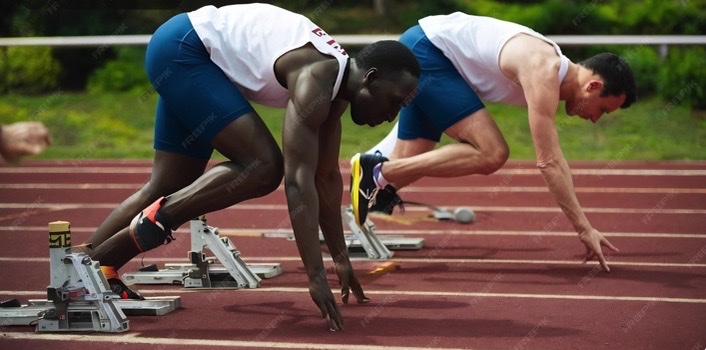
Athletics is a broad term for sports involving competitive running, jumping, throwing, and walking, commonly known as track and field, and includes road running, cross-country, and race walking. It’s an ancient sport central to the Olympics, featuring events like sprints, hurdles, relays, long jump, shot put, and marathon, emphasizing basic human skills and physical prowess.
Key Components of Athletics
Track Events: Races on a track, including sprints (100m, 200m, 400m), middle-distance (800m, 1500m), long-distance (5000m, 10000m, marathon), hurdles, and relays (4x100m, 4x400m).
Field Events: Involve jumping (long jump, triple jump, high jump, pole vault) and throwing (shot put, discus, javelin, hammer throw).
Combined Events: Multi-discipline contests like the decathlon (men) and heptathlon (women).
Road Running & Race Walking: Events held on roads, such as the marathon, half marathon, and race walking.
Cross Country: Long-distance running over natural terrain.
cycling

The cycling sport, or bicycling/biking, is competitive activity using bicycles, encompassing various disciplines like road racing, mountain biking (MTB), track cycling, BMX, cyclo-cross, and even non-racing sports like artistic cycling and bike polo, governed internationally by the UCI, and involves racing for speed, skill, or endurance across different terrains and formats
Pickleball
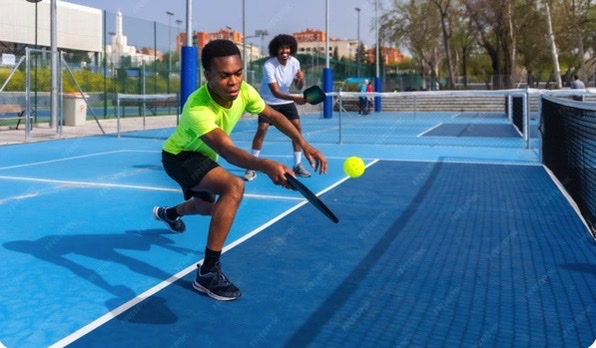
Pickleball is a paddle sport blending tennis, badminton, and ping-pong, played on a badminton-sized court with paddles and a perforated plastic ball (wiffle ball). Players hit the ball over a net, aiming to score points when the opponent fails to return it legally, following key rules like underhand serves, the two-bounce rule (ball must bounce once on each side before volleying), and staying out of the non-volley zone (the “kitchen”) near the net.
Swimming
Swimming sport is a competitive aquatic activity where individuals race by propelling themselves through water using coordinated arm and leg movements, focusing on speed and endurance with strokes like freestyle, backstroke, breaststroke, and butterfly, and it’s a major event in the Olympics featuring both individual and relay races in pools or open water.
Key Aspects of Swimming Sport:
Objective: To move through water faster than opponents using specialized techniques.
Strokes: freestyle (crawl), backstroke, breaststroke, and butterfly, plus the individual medley (IM) that combines all four.
Events: Races vary in distance (e.g., 50m to 1500m) and type (individual or team relays).
Venue: Typically held in 50-meter pools, but also in open water (lakes, seas) for longer races.
Major Competition: A core part of the Summer Olympic Games, demanding strength, skill, and technique.
Technique: Success relies on maintaining a streamlined body position (reducing drag), efficient arm/leg coordination, and proper body rotation,
Squash
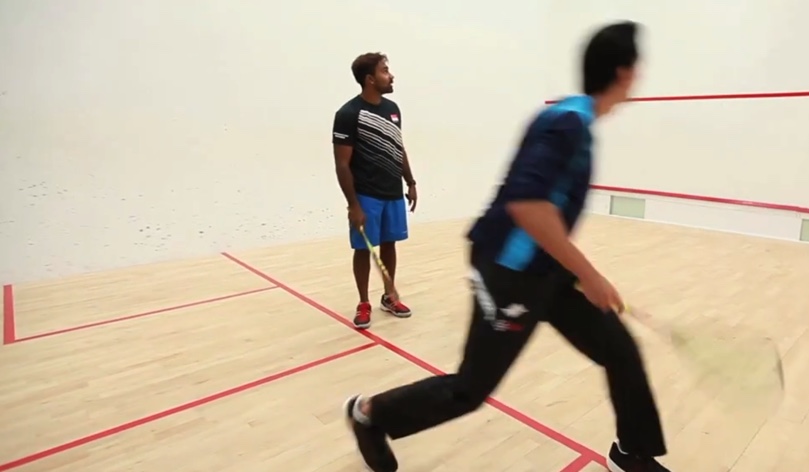
Squash is a fast-paced racket sport played by two or four players in a four-walled court, hitting a small rubber ball with rackets, aiming to strike the front wall so the opponent can’t make a valid return before the ball bounces twice. It’s a strategic game demanding agility, endurance, and quick reflexes, played indoors on a hardwood court with specialized rackets and a hollow rubber ball that needs warming up. Points are scored when an opponent fails to return the ball legally, with games usually going to 11 points.
tennis
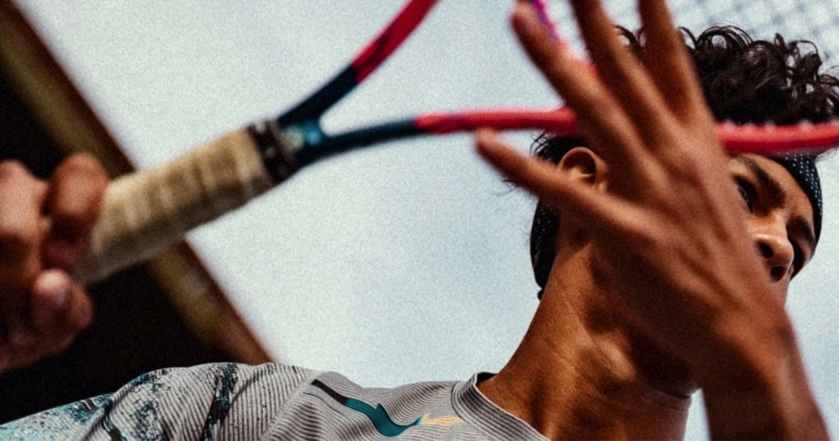
Tennis is a racket sport where two players (singles) or two teams (doubles) hit a ball over a net on a rectangular court, aiming to hit it so the opponent can’t return it legally, scoring points when the opponent fails or commits an error. Players use strung rackets to strike the felt-covered ball, bouncing it once (or hitting it in the air) before it lands in the opponent’s court.
Key Aspects:
Objective: Score points by hitting the ball out of the opponent’s reach or forcing them into an error.
Players: Singles (1 vs 1) or Doubles (2 vs 2).
Equipment: Rackets and a tennis ball.
Court: A rectangular court divided by a net, with different surfaces like grass, clay, or hardcourt.
Gameplay: Players serve to start, then rally (hit the ball back and forth), hitting it before it bounces twice.
Scoring: Points (15, 30, 40, game), games, and sets lead to winning a match.
Triathlon
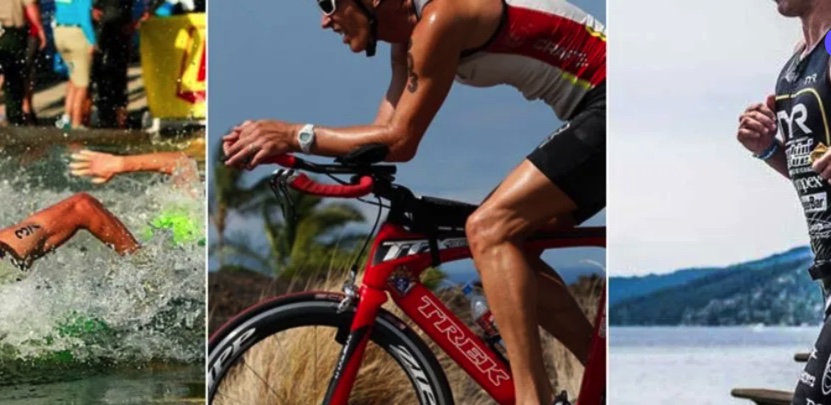
A triathlon is a multi-stage endurance sport that involves completing three continuous disciplines: swimming, cycling, and running, in that specific order, with transitions between each. Athletes race against the clock to achieve the fastest overall time, and events vary greatly in distance, from short “sprint” races to the famously grueling Ironman.
The Disciplines (in order):
Swim: Competitors swim a set distance, often in open water (lakes, oceans).
Bike: Athletes transition to their bicycles and cycle a specified route.
Run: Finally, they dismount and run to the finish line.